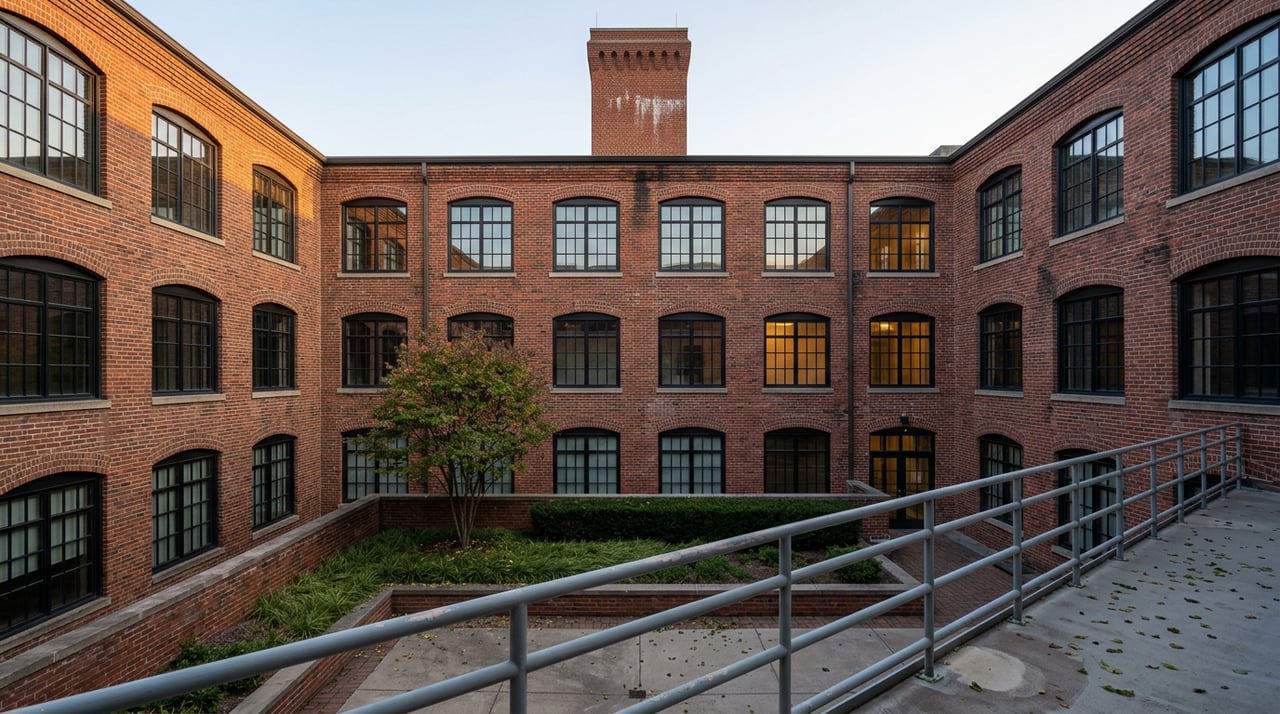
Walk the few blocks between Roselle Park's train station and downtown this fall and you will pass several hundred new apartment units that did not exist a decade ago, spread across three separate buildings. Pull the median home price for the same borough and you will find it essentially flat over the past year. Those two facts sitting next to each other is the story, and it is not the one most people assume when they hear "500 new units."
The instinct is to connect new construction with rising prices. More building activity, more demand signal, more upward pressure on everything nearby. In Roselle Park, the ownership market has not behaved that way. Understanding why matters if you are comparing this borough to others in Union County, because the number you see on a portal is measuring something narrower than "how much has Roselle Park gone up."
Three Buildings, One Redevelopment Wave
The wave started with Meridia on Westfield, a 140-unit building at 610 West Westfield Avenue that opened during the pandemic and, according to the borough's mayor speaking to Union News Daily, filled up fast. That early success set up the next phase.
In 2021, developer Capodagli Property Co. broke ground on a second, much larger project a short distance away at 10 Westfield Ave W, now known as Meridia Roselle Park 10. Greystone Capital Advisors arranged a $65 million construction loan for the 325-unit building, which includes a 518-space parking garage and ground-floor retail. The mayor described Capodagli's confidence in the site plainly:
"They're usually in areas such as Rahway, and they're the first one to show a signal to the market that the town is ready to develop and ready to transform."
A few blocks away, on West Webster Avenue near the train station, a third building has since been completed. Now operating as Veranta by Kontos, the 57-unit property carries 51 market-rate units and 6 affordable units, with half of the affordable units marketed with a preference to military veterans, according to Real Estate NJ. Progress Capital arranged the roughly $15 million construction loan for developer The Kontos Group, and by early 2026 the project had moved on to lease-up financing, with CBRE arranging an $18 million bridge loan to support that phase. Add the three buildings together and this small transit-adjacent stretch of Roselle Park has absorbed roughly 500 new residential units, almost all of them rentals, in under six years.
What the Price Data Actually Says
Given that much new supply, you would expect the home value figures to be moving. Here is what the most current readings actually show.
| Source | What It Measures | Figure | Time Window |
|---|---|---|---|
| Zillow's Home Value Index | Typical value of the same homes tracked over time | $552,963 | Up 0.2% year-over-year, as of June 2026 |
| Movoto (closed sales) | Median price of homes that actually sold | $549,000 | June 2026, homes taking a median of 25 days to sell, up from 20 days the year before |
| NJMLS-fed listing data | Median home sale price | $560,000 | Reported up 6% year-over-year |
None of these are dramatic. A same-home value index sitting nearly flat and a median sale price moving in the low single digits describes a market that is stable, not one absorbing a shock from 500 new units next door. Even the slight lengthening in days-on-market, from 20 to 25, points to a market that has cooled a touch rather than one under new pressure.
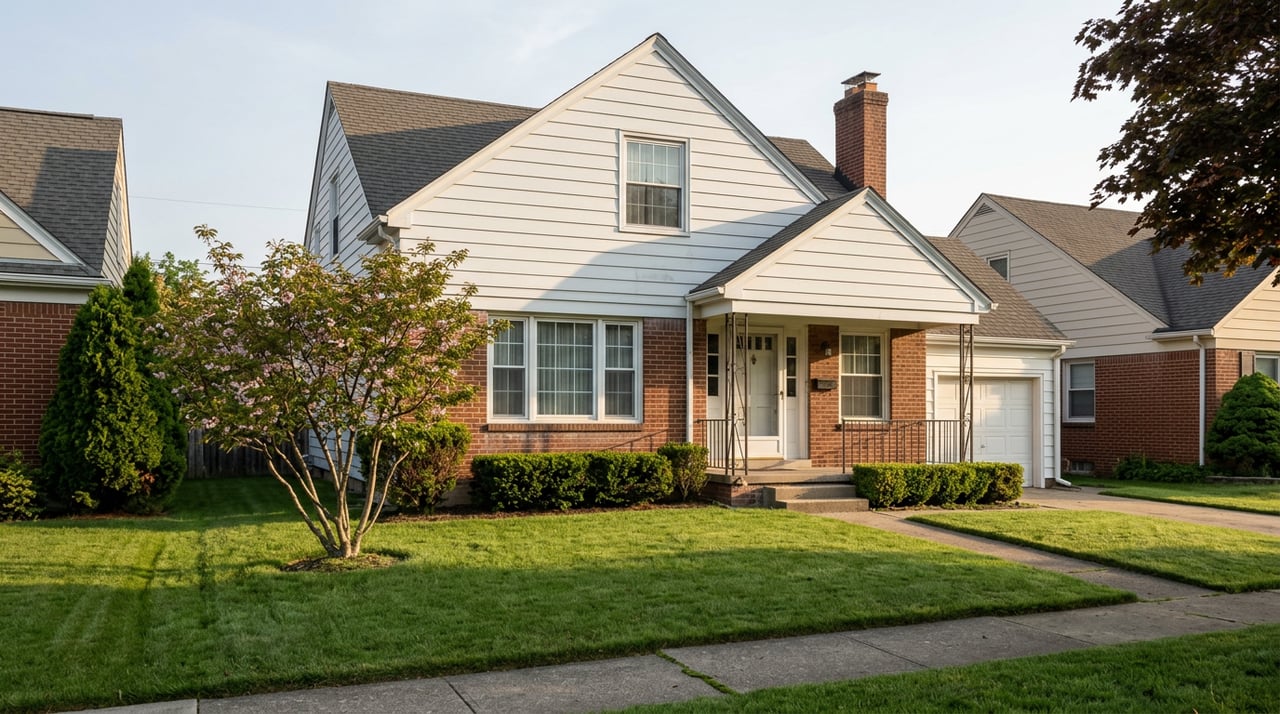
This matters for a specific reason: all three of these buildings are rentals. An appraiser pulling comparable sales for a single-family resale in Roselle Park is not going to use a 325-unit apartment building as a comp. The two markets run on parallel tracks. New rental supply can change who is competing for apartments in town without touching what a three-bedroom cape on a side street actually sells for.
Why More Supply Didn't Spike the Median
The mechanism behind this is worth naming, because it explains a pattern that shows up across other North Jersey towns pursuing the same redevelopment strategy. Roselle Park has approved these projects under "Area in Need of Redevelopment" designations, a tool that lets the borough bypass its standard zoning code for a specific parcel in exchange for the density a developer needs to make a project pencil out. It is a way to convert underutilized or vacant commercial land into tax-generating housing without rewriting the residential zoning that governs the single-family blocks around it. That tradeoff is not without friction locally. Borough council discussions have surfaced ongoing tension over PILOT, or Payment in Lieu of Taxes, agreements tied to these projects, with some officials and residents raising concerns that the arrangements do not send enough new revenue directly to the school district.
The zoning mechanics matter because they draw a hard line. These redevelopment designations apply parcel by parcel, not borough-wide, which means the R-1 Single-Family Residence Zones nearby stay governed by the ordinary residential code. A buyer looking at an existing single-family house is shopping in a housing stock that has not been rezoned or otherwise altered by the construction happening nearby. The new units absorb rental demand, first-time renters, and some of the household formation pressure that might otherwise show up as bidding competition for existing homes. That is very likely part of why the ownership-side numbers have stayed calm even as the borough adds hundreds of new addresses.
The Corner That's Next
The pattern is not finished. A borough planning document filed for an April 2026 Municipal Land Use Board meeting describes a new redevelopment plan for two parcels at 129 and 133 West Westfield Avenue, identified in borough records as Block 606, Lots 31 and 32. The properties sit on the northeastern side of West Westfield Avenue near the borough's southern boundary, and the plan itself notes that Lot 25 and the properties immediately north of the project area fall inside the R-1 Single-Family Residence Zone. In other words, this next phase of redevelopment will share a property line with existing single-family homes.
The document also notes that the current buildings on the site are vacant and in fair to poor condition, and that no residents need to be relocated because there are no existing housing units on the parcel. For a homeowner or buyer near that stretch, the practical takeaway is not alarm. It is awareness: the zoning tool the borough has used three times already is active again, on a corner that borders the same single-family district many resale buyers are shopping in.
Part of why this corridor keeps attracting redevelopment interest is the train station itself. The borough previously secured more than $30 million combined from NJ Transit for platform and accessibility upgrades, funding that predates the newest project but explains why Locust Street, the station's entrance point, keeps showing up in these plans. Transit access is the asset developers are building toward, and it is not going away.
What This Means If You're Comparing Towns
If you are weighing Roselle Park against Kenilworth, Cranford, or another Union County town, the median price alone will not tell you what you are actually buying into. Ask a more specific question: is the inventory I'm shopping the same inventory the median reflects? In Roselle Park right now, the answer is largely yes. The resale market for existing single-family homes has stayed a distinct, comparatively stable lane even as roughly 500 new rental units have come online nearby.
That stability cuts both ways. It means a buyer is not paying a premium created by adjacent new construction, since appraisals do not credit a resale home for a rental tower next door. It also means the borough's walkability and transit access, real amenities that typically support long-term value, have not yet been fully priced into the ownership market the way they might in a town without this supply cushion.
A Few Common Questions
Will the new apartment buildings affect my home's resale value? Not directly, and not through the appraisal process. Appraisers compare your home to other homes that have sold, not to nearby rental buildings. The connection, if any, runs through neighborhood demand over a longer horizon, not through comps.
Is Roselle Park still a fast-moving market for buyers in 2026? By one widely used measure, homes in Roselle Park have recently sold in a median of 43 days, compared to a national average closer to 57 days. Separately, another source tracking closed sales put the local median at 25 days, up slightly from 20 days the year before. The exact number depends on which data provider and time window you use, but every read points the same direction: still a quicker sale than the typical U.S. home, even if the pace has eased a bit from its fastest point.
Does the pending redevelopment near West Westfield Avenue mean my street could be rezoned next? The current plan applies specifically to Block 606, Lots 31 and 32, and the borough's own document confirms the adjacent R-1 zone is not part of the redevelopment area. If you own or are considering a home nearby, it is worth following the Municipal Land Use Board's public meeting schedule directly rather than relying on secondhand summaries.
If you are trying to figure out what a specific address in Roselle Park is actually worth, given everything happening around its downtown and train station, that is exactly the kind of question that benefits from someone who tracks both the real estate side and the financing side of the deal. Prime Real Estate Services works with buyers and sellers across Union County and the rest of North Jersey, and we are glad to walk through what these numbers mean for your specific situation. Contact us when you are ready to talk it through.