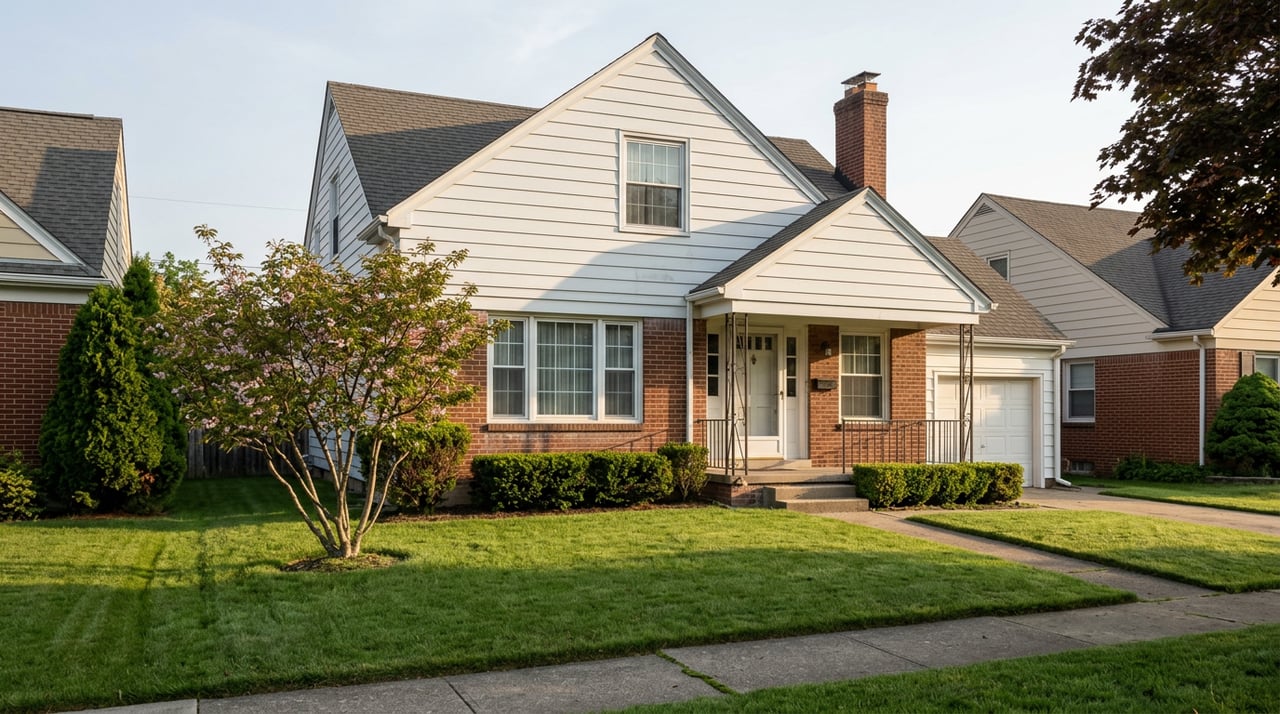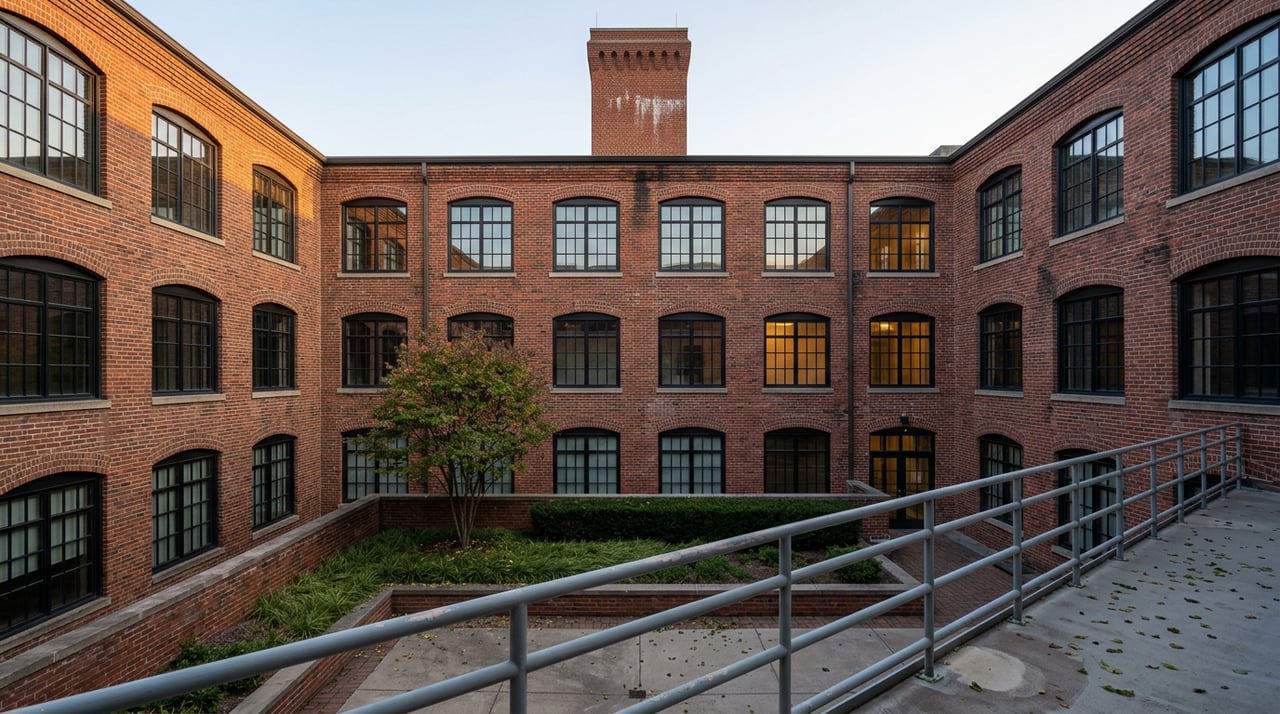
Search for a two-family home near Elizabeth's train station and you'll notice something strange within the first few listings. Some properties are priced and described like the traditional owner-occupant duplexes that have defined Elizabeth's housing stock for decades. Others are priced closer to what you'd expect near a brand-new luxury rental tower, even though the building itself is fifty years old with the same brick facade as the block behind it.
That's not a pricing error. It's two different markets sitting on the same streets, and the line between them runs almost exactly along how close a property sits to Elizabeth's train station and the wave of institutional capital now building around it.
The Median Price Depends On Which Elizabeth You Mean
Ask three different sources what a home costs in Elizabeth right now and you'll get three different answers. Portal data pegged the citywide median sale price at $515,000 in March 2026, while a separate tracker put April 2026's median closer to $544,000. NJ Realtors MLS data from earlier in the year put the city's median nearer $425,000. None of these sources are wrong exactly. They're measuring a city that doesn't behave like one market.
Elizabeth is New Jersey's fourth-largest city, and its housing stock swings from waterfront industrial-residential blocks to a downtown core now attracting institutional multifamily investment to a single pocket of legacy single-family streets. A citywide median smooths all of that into one number, which is exactly why it's the wrong number to anchor a search around if you're buying here.
What's Actually Happening Around The Train Station
The reason downtown comps have started to move is concrete, not speculative. In February 2026, JLL arranged roughly $83 million in capitalization for ECCO, a 258-unit residential project at 250 Union Street, positioned directly across from Elizabeth's newly renovated, $75 million train station and carrying a Walk Score of 95. It sits within walking distance of Union County College, Kean University, Trinitas Regional Medical Center, and the Union County Courthouse.
ECCO is the second phase of a bet the market already validated once. Its predecessor, a 267-unit building called Vinty, delivered in 2022 as the first phase of the same redevelopment and leased up completely within a year, which is the kind of absorption number that tells developers and appraisers alike that downtown Elizabeth's rental demand is real and durable.
The demand math behind both projects is straightforward. Elizabeth's population has grown 10.6% since 2010 to roughly 137,401 residents, and about 73% of those residents rent rather than own. Across Union County, multifamily rents have climbed 18% over the past five years while occupancy has held above 96%. When institutional money sees numbers like that next to a $75 million train station, it builds. And when it builds successfully at that scale, the comps for everything nearby start to shift, including the small two- and three-family buildings that have nothing to do with the new construction except proximity.
The Two Comp Regimes You're Actually Choosing Between
This is the part a citywide median can't show you. Elizabeth's multifamily stock is no longer priced by one logic. It's priced by two, and which one applies to a given property depends almost entirely on location relative to the downtown transit core.
| Downtown / near train station | Elizabethport, Bayway, North End | |
|---|---|---|
| What sets the price | New luxury lease-up performance (Vinty, ECCO) and downtown redevelopment momentum | Traditional rental demand, small-investor cash flow math |
| Typical multi-family range | $575,000 to $1.1 million (Downtown, as of January 2026) | $432,500 to $530,000+ typical entry point (Elizabethport, January 2026) |
| Recent appreciation | Downtown's trailing 12-month median sale price rose 43% to $475,000 | Elizabethport's trailing 12-month median rose a much steadier 2% to $422,500 |
| Who's buying | Investors and owner-occupants competing against institutional rental comps | Owner-occupants and small investors buying on traditional rent-to-price math |
That 43% jump in Downtown Elizabeth's trailing median sale price against Elizabethport's 2% climb over the same period isn't a coincidence of two neighborhoods drifting apart slowly. It's what happens when a submarket gets a new comp set dropped into it in the form of a fully leased 267-unit building and an $83 million follow-up project, while the submarket two miles east keeps trading on the same fundamentals it always has.
The One Section Still Playing By The Old Rules
If what you actually want is a single-family home rather than a multifamily investment, you're shopping in a much smaller city than the listings suggest. Elizabeth's own 2025-2029 housing plan states plainly that most of the city's housing is high-density multifamily present in nearly every neighborhood, and that Elmora and Westminster hold the largest remaining concentration of single-family housing in Elizabeth.
That concentration shows up in the pricing. Elmora's median home price ran $575,000 as of March 2026, with multi-family properties in the neighborhood trading between $735,000 and $1.5 million, well above what the same property type commands in Elizabethport or Downtown. But list prices in Elmora were running noticeably hotter than that: one tracker showed the neighborhood's median asking price at $639,000 the same month, a gap between what sellers are asking and what's actually closing that's worth watching if you're negotiating there. A wider ask-to-sale gap usually means more room to negotiate, or it means inventory is sitting longer before sellers adjust. Either way, it's a different signal than Downtown's tight 40-day average market time.
If single-family is the goal, Elmora isn't one option among many in Elizabeth. It's close to the only one.
What The Next Two Years Change In North Elizabeth
The comp story downtown isn't finished, and it's about to extend north. A $160 million Port Authority project, the EWR Station Access initiative, is expected to open in 2026 and will cut the commute from North Elizabeth to Newark Liberty International Airport and Newark Penn Station from as long as 40 minutes by bus down to under 10 minutes by train.
That kind of transit-time compression is the same lever that made downtown Elizabeth attractive to the capital behind Vinty and ECCO. North Elizabeth doesn't have a 258-unit luxury project under construction yet, but it now has the infrastructure precondition that usually comes before one. Buyers looking at North End or North Elizabeth properties today are effectively buying ahead of a transit upgrade that historically drives exactly the kind of institutional interest reshaping the downtown core.
What This Actually Means If You're Shopping In Elizabeth
Before you anchor on any median price you've seen quoted for Elizabeth, know which of these three markets the specific property sits in:
- Near the train station or in the downtown core: expect your comps to increasingly reflect large, professionally managed rental buildings. That can work in your favor if you're buying to hold and rent, since rent growth here has real institutional backing. It can work against you if you're trying to buy at owner-occupant, small-investor pricing.
- Elizabethport, Bayway, or North End: this is still the traditional small-investor market, where a two- or three-family building prices on rent-to-purchase math rather than luxury comps, at least for now. North End is the section most likely to see that change first as the EWR Station Access project comes online.
- Elmora or Westminster: this is functionally Elizabeth's single-family market. If a detached house with a yard is the goal, this is where the inventory actually exists, and it's priced and negotiated more like a traditional suburban market than an urban multifamily one.
A Few Questions Worth Asking Before You Write An Offer
Is a two-family near the train station a better investment than one in Elizabethport? It depends on your strategy. Properties near the downtown core are increasingly priced against institutional rental comps, which can support strong long-term rent growth but also means you're likely paying more upfront. Elizabethport still offers traditional small-investor economics at a lower entry point, with slower but steadier appreciation.
Does the EWR Station Access project affect home values now, or only after it opens? Transit infrastructure projects tend to influence pricing in phases, first among investors anticipating the change and later as amenities and development follow. The project is expected to open in 2026, so North Elizabeth and North End buyers are currently in the anticipation phase rather than the post-completion phase.
If I want a single-family home, should I even look outside Elmora? You can, but inventory will be thin. Elizabeth's own housing plan identifies Elmora and Westminster as the neighborhoods holding the city's largest remaining concentration of single-family housing, which means your search will be more efficient if you start there.
Elizabeth's price tag depends entirely on which version of the city you're buying into, and that distinction rarely shows up in a portal's headline number. If you're weighing a multifamily purchase near the transit core against one in a more traditional pocket of the city, or trying to figure out where Elizabeth's single-family inventory actually lives, Prime Real Estate Services can walk through the financing and pricing implications of each before you write an offer.