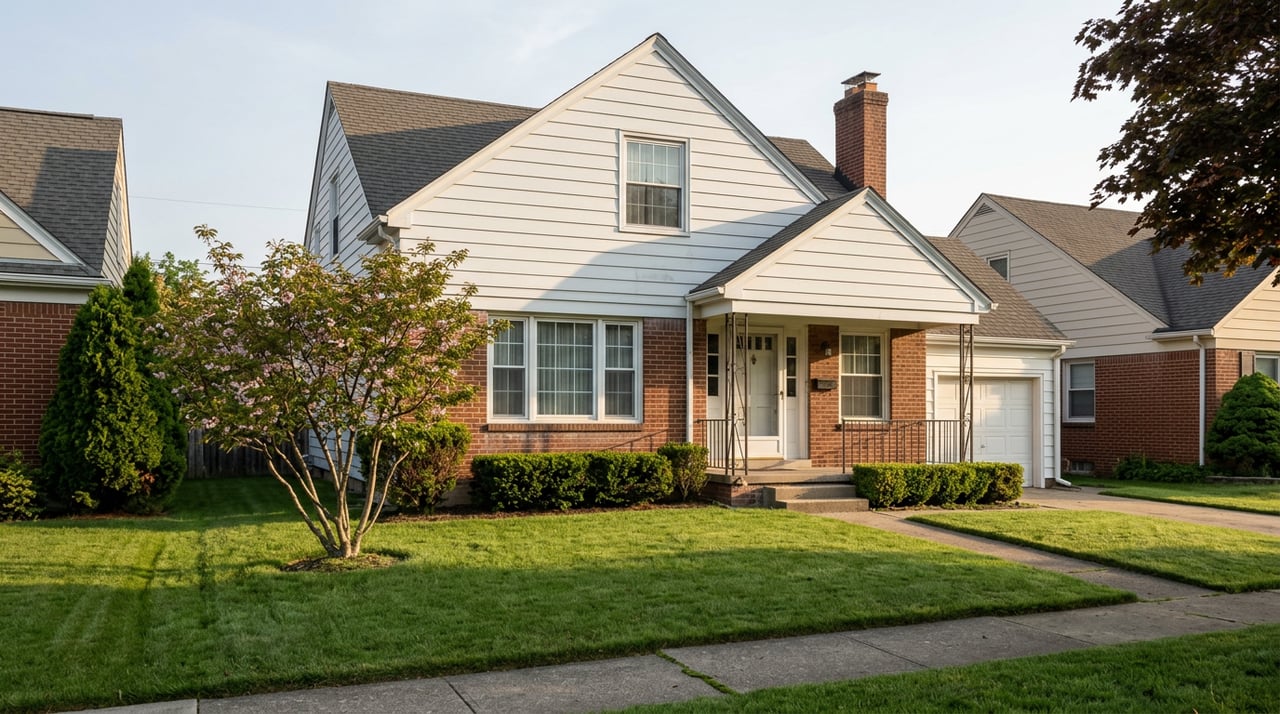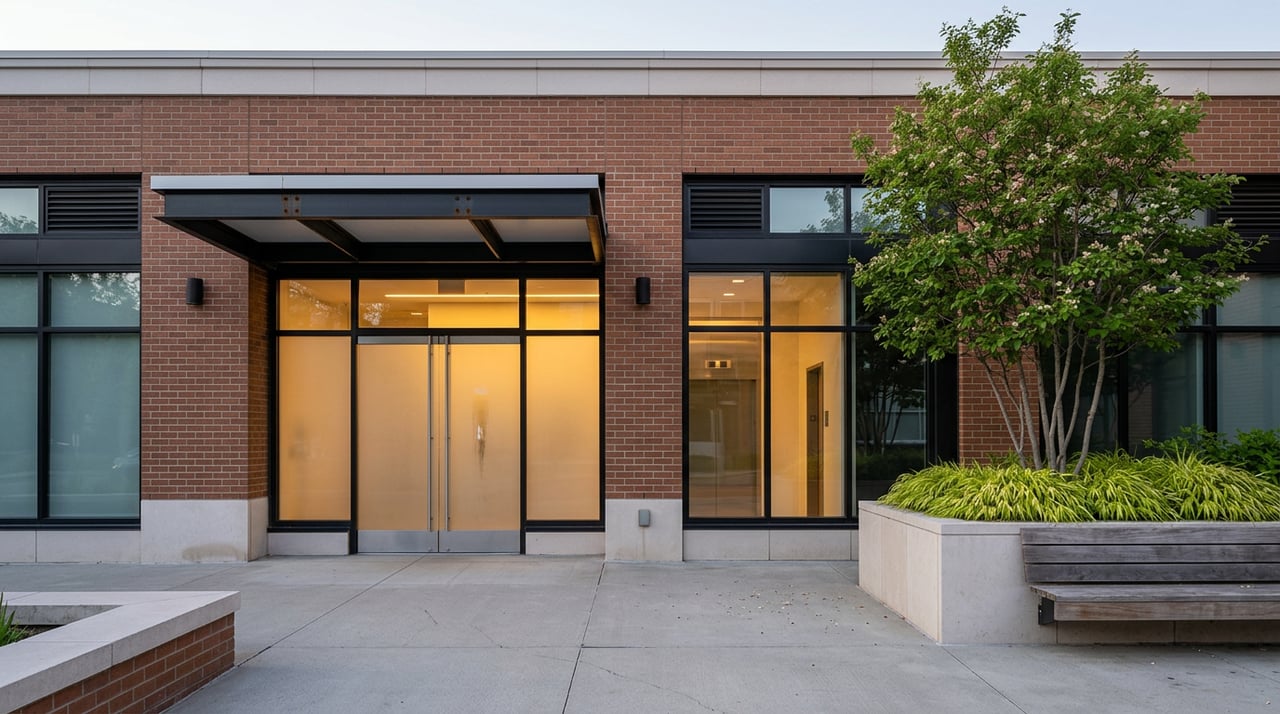
Two homes near the Harrison PATH station can carry nearly identical price tags and wildly different long-run costs, and the difference will not show up anywhere on the listing sheet. One sits on a parcel taxed the conventional way, assessed value times the town's general rate, adjusted every year like every other house in Hudson County. The other sits inside the footprint of the Waterfront Redevelopment Plan, where the owner may be paying a negotiated sum in lieu of property tax instead. Both numbers look like "taxes" on paper. Only one of them behaves like a property tax over the next decade.
That distinction matters more in Harrison than in most North Jersey towns right now, because the Riverbend District has spent the last several years turning former industrial land into one of the area's largest concentrations of new residential construction, and a meaningful share of that inventory was built specifically because a tax abatement made the numbers work for the developer. If you are comparing a unit in that district against an older two-family a few blocks away, the sticker price is the least useful number you have.
What Sits On The Old Industrial Land Along The Passaic
The Riverbend District did not happen by accident. Advance Realty Investors assembled roughly 35 acres adjacent to the Harrison PATH station, on land once occupied by Crucible Steel, Edison Lamp Works, Otis Elevator, and the Peter Hauck Brewery. After Peter Cocoziello acquired the site in 2002, the company took on a brownfield cleanup of a scale rarely attempted in the state, clearing the way for a new PATH station, a soccer stadium now known as Sports Illustrated Stadium, and the multi-phase community branded Riverbend.
The plan calls for roughly 3,300 residential units and about 100,000 square feet of retail and commercial space once complete. Three residential phases are already open: Cobalt Lofts, Steel Works, and The Wyldes. Keeper's, described as Harrison's new all-day neighborhood bar and grill, anchors some of the street-level retail, and Riverbend Park runs along the water with trail access residents actually use.
None of that is controversial. What is easy to miss is that this entire footprint sits inside the 250-plus acre area covered by Harrison's Waterfront Redevelopment Plan, and redevelopment-area status is precisely what makes a project eligible for the tax instruments that made Riverbend financeable in the first place.
Two Different Tools, One Word On The Listing
New Jersey gives municipalities two separate tools for this, and both get called "abatements" in casual conversation even though they behave nothing alike.
| Five-year exemption | Long-term PILOT | |
|---|---|---|
| Governing law | N.J.S.A. 40A:21-1 et seq. | N.J.S.A. 40A:20-1 et seq. |
| Typical term | Five years, phasing toward conventional taxation | Ten to thirty years |
| Typical use | Smaller renovations, individual improvements | Large redevelopment projects like Riverbend |
| What owner pays | Reduced tax on the new improvement value, phasing in | A negotiated payment based on project cost or gross revenue, not the assessed value |
| Who receives the money | Standard municipal, county, and school allocation | Under state law, the municipality keeps 95 percent, the county 5 percent, with no direct payment to the school district |
| What happens at expiration | Property rolls onto the conventional tax rate on the improved value | Property rolls onto the conventional tax rate for the first time since construction, often years after the certificate of occupancy |
Harrison's own municipal code, in Chapter 196, Article III, authorizes the five-year version for improvements and new construction inside designated rehabilitation areas, and the ordinance itself notes it was adopted to take effect for new applications beginning with the 2012 tax year. Any individual agreement signed under that authority runs on its own five-year clock from the date it was granted, not from whenever the ordinance itself was adopted. A unit built and granted its exemption in year eight of Riverbend's build-out is on a different calendar than one built in year two, even in the same building.
Larger, longer-horizon PILOT agreements are the more likely instrument for a project the size of Riverbend, since that structure is designed for exactly this kind of large-scale, multi-phase redevelopment where a developer needs payment stability over ten to thirty years to make the financing pencil out.
The Number Everyone Quotes Is Already An Estimate
There is a second layer to this that most buyers never test, and it has nothing to do with new construction specifically. Public tax-data trackers do not even agree on Harrison's current effective rate. One dataset puts Harrison's effective property tax rate at roughly 1.704 percent as of 2025, down from about 3.04 percent in 2015, with a median assessed home around $468,100 and an estimated median annual bill near $11,160. Another puts the effective rate closer to 2.28 percent with a median bill closer to $10,583. Both are pulling from similar public sources and neither is wrong exactly, they are estimates built on slightly different assumptions about assessed value and exemptions.
That decade-long decline in the townwide rate is not an accident either. A falling rate on a growing tax base is what you would expect if new PILOT and abatement revenue is expanding what the town collects overall, even while individual abated parcels are paying less than a conventionally taxed home of similar value would. The rate can fall townwide at the same time a specific new-construction buyer is quietly building toward a payment that will look nothing like today's bill once the underlying agreement ends.
The lesson generalizes past Riverbend. If two respected data trackers cannot agree on Harrison's average effective rate to within half a percentage point, no buyer should be pricing a single unit off a portal's estimated tax figure. The only number that matters is the one on the recorded financial agreement and the current tax bill for that specific block and lot.
Where This Catches Buyers At The Closing Table
The practical exposure shows up in two places, and both are avoidable with the right questions asked early.
The first is simple budgeting. A buyer who anchors a monthly payment on today's abated tax line, especially on a five-year exemption that is already partway through its phase-in, can be caught off guard when the bill steps up toward the conventional rate on schedule, sometimes with several years still left on the mortgage.
The second is underwriting. Lenders do not all treat an abated tax payment the same way. Some will qualify a buyer using today's lower, abated figure. Others will run debt-to-income against the projected fully-taxed amount once they see a PILOT or exemption on the title work, which can shift the qualifying number for a borrower who was counting on the lower figure holding through closing. This is exactly the kind of detail that gets missed when a buyer works with a lender and an agent who are not comparing notes, and it is the reason coordinating financing and property strategy in the same conversation matters more on abated new construction than almost anywhere else in the transaction.
Before you write an offer on anything inside the Riverbend footprint, get answers in writing to these:
- Which instrument applies to this specific unit, a five-year exemption under Chapter 196 or a longer PILOT tied to the redevelopment agreement?
- What is the agreement's actual start date and term, independent of when the town's general ordinance was adopted?
- Is there a phase-in schedule, or does the payment step up all at once at expiration?
- What would this unit's tax bill be today under conventional taxation at the current rate, not a projection built on an old rate?
- How will your specific lender treat the payment for qualifying purposes, the current abated figure or the projected conventional one?
A Couple Of Questions Worth Settling First
Does this only affect new construction? The five-year and long-term instruments described here apply specifically to properties granted an exemption or PILOT agreement, which in Harrison means Riverbend-era and other qualifying redevelopment-area construction. An older single-family or two-family home elsewhere in town is almost certainly on conventional taxation and follows the townwide rate directly.
Is an abatement a red flag? Not inherently. A PILOT can make a unit's carrying cost genuinely lower for years, and that can be a real advantage during a hold. The point is not to avoid abated inventory, it is to price the unit against what it will owe over your expected hold period, not against today's payment alone.
Where do I actually confirm this for a specific address? The recorded financial agreement lives with the municipal clerk or the redevelopment agency, and the tax assessor's office can confirm which instrument, if any, applies to a given block and lot. A listing sheet or portal estimate is not a substitute for either.
If you are weighing a Riverbend unit against an older Harrison home, or trying to figure out what a specific building's tax structure actually means for your monthly number five or ten years out, that is exactly the kind of question worth working through before you make an offer, not after. Leo Lopes coordinates the property side and the financing side of that math in the same conversation, so the number you qualify on and the number you budget on come from the same place. Contact us when you are ready to look at a specific address.